North Bank Wildlife Assam – Secrets Beyond Kaziranga’s Shadow

North Bank wildlife Assam and the Quiet Side of the Brahmaputra
When people think of Assam’s wilderness, Kaziranga usually takes centre stage. Yet North Bank wildlife Assam reveals another side of the Brahmaputra, where smaller parks and floodplain forests harbor remarkable biodiversity with far fewer visitors. On the northern bank, grasslands, wetlands, and riverine forests create a patchwork of habitats that feel both vast and intimate.
Parks like Orang and Pobitora are often highlighted for rhinos and birds, but the broader North Bank wildlife Assam landscape includes lesser-known reserves, community forests, and river islands. Here, marsh deer graze in early morning fog, otters slip through narrow channels, and flocks of waterfowl trace shifting patterns across the sky. The sense of discovery is strong because so much of this terrain remains off the usual tourist circuit.
Villages, Floodplains, and Everyday Encounters With North Bank wildlife Assam
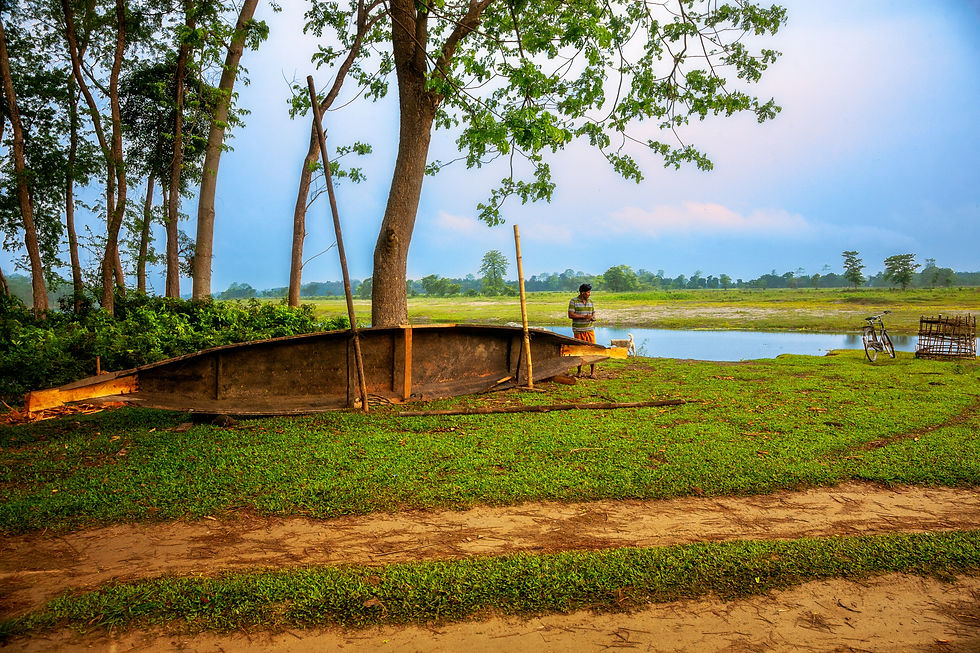
For many local communities, North Bank wildlife Assam is part of daily life rather than a distant attraction. Farmers tend fields close to forest edges, fishers cast nets in channels shared with otters and turtles, and children grow up recognising bird calls long before they can read. When travelers stay in homestays and walk through these villages, the distinctions between “park” and “outside” blur into a living mosaic.
Guided boat rides along side channels often reveal more than jeep safaris alone. Visitors watch buffaloes wallow, see kingfishers dive for small fish, and sometimes catch glimpses of elephants moving carefully between wooded patches. Discussions with village leaders and local conservation workers help explain how flood cycles, cropping decisions, and embankment projects influence North Bank wildlife Assam year after year.
Choosing Low-Impact Routes in North Bank wildlife Assam
Because infrastructure is lighter on the north bank, responsible travel is especially important. Smaller groups place less strain on trails and boat landings, while longer stays reduce the pressure created by constant turnover. Travelers can support North Bank wildlife Assam by using local guides, respecting distance rules around animals, and contributing to community-led initiatives such as wetland restoration or anti-poaching patrol support.
Experiencing this region can change how visitors think about conservation. Instead of picturing isolated parks, they begin to see river basins as interconnected systems where wildlife, agriculture, and human settlement all shape one another. North Bank wildlife Assam becomes a lens through which to understand the entire Brahmaputra landscape as a shared home rather than a series of separate zones.


Comments